
A Psychologist Shares Self-Care And Mindfulness Practices For Expecting And New Moms
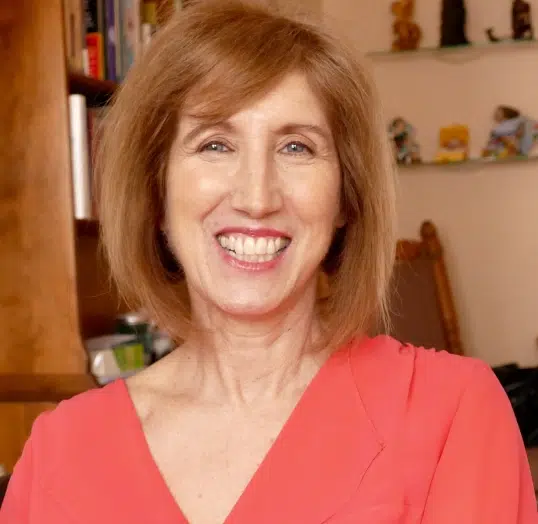
For the past 30 years, I’ve been studying women’s health psychology and how women’s changing lives, moods, and bodies influence each other. My expertise in perinatal mood and anxiety disorders began when a female psychiatrist, whose office was next door to mine, asked me to see a mom with postpartum depression. I had not given birth to my first child yet, but I liked working with women and families, so I agreed to see the distressed mom. Eventually, my treatment with her led to a remission of her symptoms. I don’t recall what I did, but without realizing it, I had stumbled onto what would become my clinical specialty and a lifelong mission to help women and their families improve their emotional health and wellbeing.
“Like most novice moms, I had no idea what was ahead.”
Then I had my first child, Jessica. Despite treating postpartum moms and my background in child development, I was miserably unprepared and overwhelmed. Before giving birth, I recall laughing at my OB/GYN when he told me having an infant would be more challenging than getting my PhD or license. How could that be? Like most novice moms, I had no idea what was ahead. Whether friends share their experiences truthfully or not, you can’t imagine before you have a baby how life-altering it is.
My life centered on my daughter, this 7.5 lb wonder who could barely see. In his book, “Happiest Baby on the Block,” pediatrician Harvey Karp says that in the first few months, babies, struggling to transition from their mothers’ wombs, are more like fetuses than infants. I agree wholeheartedly. I spent my days tending to her needs, breastfeeding every few hours, changing diapers, wiping spit-up, walking and rocking her, doing her endless laundry, and comforting her.
During my maternity leave, my mom came over daily to provide support physically and emotionally, but instead of taking a nap or resting, I would visit with her or do something around the house. My daughter’s dad, who was my husband then, was still working (ha, of course!). In those days, practicing self-care and making my health and wellbeing a priority were not on my list. Like many women, my priority was to be a caregiver, not the receiver. I was fortunate that Jessica had a sweet temperament and was easily soothed.
“In those days, practicing self-care and making my health and wellbeing a priority were not on my list.”
By the end of the first month, I thought things were going reasonably well, only to discover at Jessica’s first month’s check-up that she wasn’t gaining weight. To remedy this, my pediatrician told me I would need to start waking her every few hours, day and night, to breastfeed. The sleep deprivation was torture, and my mood and health tanked. I felt like I was failing as a mom. I didn’t want to be around my friends, and my usually optimistic outlook dimmed. I spent all my energy breastfeeding and trying to rest in between, but my restless mind wouldn’t. My OB/GYN scheduled a recheck at 10 weeks because he was concerned that I was starting to have postpartum depression.
Finally, my husband and I decided to start supplementing Jessica with a bottle a couple of weeks before my scheduled return to work. This allowed me to start sleeping again and improving my health and wellbeing. While I recommended self-care to my clients to recover from their postpartum conditions, I didn’t think I needed it myself. Wrong! My postpartum experience convinced me of the importance of self-care for new moms and how critical their health is to their family’s wellbeing.
“While I recommended self-care to my clients to recover from their postpartum conditions, I didn’t think I needed it myself. Wrong!”
When my second daughter, Rachel, arrived four years later, I diligently practiced self-care. By this time, my dad had retired, and he and my mom would come over daily to help care for the girls and me. My dad would play with my older daughter while my mom and I took turns tending to my younger daughter. I would nap, take showers, and get some time for myself. Most nights, my parents would leave me with a warm dinner on the stove.
I had no symptoms of depression or anxiety, and thoroughly enjoyed my maternity leave and being with my children. I became convinced that self-care is not selfish but vital to weathering the storms of new motherhood and for lifelong health and wellbeing.
How to start with self-care basics
As women and health practitioners became more aware of the effects of pregnancy and postpartum on maternal mental health, it became popular to say, “Put your oxygen mask on first,” which means you can’t help someone else if you don’t take care of yourself. Martha Beck, a well-known life coach, likes to put it this way: “A conscious parent can help an unconscious child, but a conscious child can’t do much to help an unconscious parent.” What she means is that we must take good care of ourselves if we want to be able to take good care of our loved ones.
“Convincing moms to take care of themselves, is one of the greatest challenges I’ve faced.”
Self-care, or convincing moms to take care of themselves, is one of the greatest challenges I’ve faced. Years ago, I thought that subsequent generations of moms would learn to adopt a kinder and gentler view of motherhood, but this hasn’t happened. Instead, most moms today expect more of themselves than we did, whether it’s seamlessly learning to breastfeed (which is an acquired skill), teaching sign language to their newborns who can barely see and hear, or choosing the right developmental toys and infant gear. Social media sites and influencers make this worse by heightening our tendency to compare how we’re doing with our peers. Unfortunately, this intensifies moms’ feelings of inadequacy, making them think that they’re “bad” moms, failing where others are succeeding.
Back in the day, I also thought that younger women, especially new and expecting moms, would have learned that self-care is self-preserving, not selfish, and would routinely prioritize their health and wellbeing. This too has not occurred, although it’s truer during pregnancy than postpartum because the baby’s health depends on how well they care for themselves. When I tell them that their health and wellbeing is equally important, they agree — and then tell me why it can’t be a priority in their lives because they don’t have the time or energy to spare.
When I created my mindful stress reduction program specifically for moms, I made certain they could use experiences that were already occurring in their lives, without having to add any other activities into their already too-busy schedules. For example, in the skillset “Savor the Moment,” which is all explained below, all you have to do is notice and pay attention to your child cooing, or the warmth of cuddling, or how soft their skin feels, to practice present moment awareness. If a new mom started thinking about their to-do list or what they’d done wrong, I had them learn to pause, take a breath, and then redirect themselves back to the sensory experience of being with their child. Simple, but not easy.
Like other habits, it requires effort and persistence to learn to prioritize your health and wellbeing. One of my colleagues told her clients, “At least, put yourself on the list before the dog.”
Following the four pillars of health
Once you decide to prioritize your health and wellbeing, the next step is to make what I call The Four Pillars of Health a routine part of your life.
In my life and clinical work, the pillars form the foundation for optimal mind-body health and wellbeing and include: Sleep, nutrition, exercise, and stress reduction. When one is compromised, the others often suffer. Because new moms are in a constant state of their needs for sleep, nutrition, exercise, and stress relief not being met, they are more likely to experience a depressed and anxious mood, which can turn into a full-blown depression or anxiety episode over the first few weeks or year following childbirth.
“The pillars form the foundation for optimal mind-body health and wellbeing and include: sleep, nutrition, exercise, and stress reduction.”
Combined with rapid hormonal changes that affect brain chemistry and mood, all expecting and new moms will have a greater vulnerability to mental and emotional health symptoms depending on their own mental health history, family mental health history, ease or difficulty of their pregnancies and deliveries, baby’s health, and their life situation. Current epidemiologic data indicate that 1 out of 7 women with low to moderate risk will experience a postpartum clinical episode and that this increases to 1 in 4 for women with “high-risk conditions” like moms with extended bedrest, fertility issues, or giving birth to multiples. Almost half the moms who came to see me postpartum had no prior history of clinical depression, anxiety, OCD, PTSD, or mania, and couldn’t understand why this was happening now.
After my daughter Jessica was born, I sorely neglected my basic needs for sleep, nutrition, exercise, stress reduction, and self-care. Although my mom came daily to share infant caregiving and provide emotional support, I kept trying to do it all because now “I was the mom.” This led me to the brink of clinical depression. At my six-week check-up, my OB scheduled a follow-up appointment a month later, out of concern that I was not myself and the “overwhelm” was closing in on me. Leaving his office, I realized that I was not paying attention to my health and wellbeing, despite this being my clinical advice for the new and expecting moms I gave them. A light bulb moment, indeed!
Around this time, my husband and I agreed that he would start giving our daughter a bottle for her midnight feeding, which gave me more sleep time. I would feed her around 9 or 10 p.m. and get up with her at 2:30 or 3 a.m. for her next feeding. I let my mom stay inside the house with her if she was napping, and I would go for a short walk around the neighborhood. In the evening, my husband would drive her around if she wouldn’t stop crying so I could wind down before bedtime. I let my mom fix me lunch so I would eat, and she would hold the baby if she was fussing or inconsolable if I needed a break. I also tried to make healthier choices when I ate instead of the sugar, carbs, and caffeine I’d been using to keep me going. I took time once a week to do what I wanted, which might be running an errand but being alone felt calm and restful.
Gradually, I felt better, and with my second daughter, I practiced prioritizing my health and wellbeing from the start. As I tell my clients, an ounce of prevention is worth a pound of cure.
My favorite mindfulness practices for expecting and new moms
In 2019, I released a book, “Stress Less Live Better for Pregnancy, Postpartum and Early Motherhood.” There, I introduced mini-mindfulness practices so new and expecting moms could easily learn these skills without feeling guilty that they were taking time away from their babies. I realized that if I wanted to help them learn to ease their stress, worry, and overwhelm, I couldn’t add to it. For those who wanted to learn more, I recorded an exercise from each skillset they could listen to if they had time.
“I realized that if I wanted to help them learn to ease their stress, worry, and overwhelm, I couldn’t add to it.”
Their experiences convinced me that shorter, more frequent skills practice also worked. Moms with insomnia told me they listened to the body scan relaxation to fall asleep at night and rest during the day, from my skill set “Soothe Your Body.” Breathing at a stoplight or waiting in line at the grocery store, from my skillset “Simply Breathe,” taught them to use their breath to calm down and worry less about their to-do list or what they’d messed up. Another favorite technique, from my “Savor the Moment” skill set, was to attend to their sensory experience when they took their baby outside in their stroller, gave them a bath, or cuddled with them. In this exercise, they would focus on the sights, sounds, scents, and touch sensations of what they were doing to help ease their overwhelm and unsettledness.
Here are some ways for you to use these mindfulness skills to calm your body and quiet your mind:
1. Simply Breathe
Before you put your baby down in their crib, breathe in to the count of three and out to the count of three. Do this each time you pick them up. When you leave your residence to take your baby out or run an errand, take 3 deep breaths in through your nose and out through your mouth. Do the same when you return. While you’re waiting to check out, for a stoplight to change or, in carpool line, focus on taking 3 deep breaths in and out, noticing how your belly rises with each inhalation and falls with each exhalation.
2. Soothe Your Body
Take a moment to notice where you may be carrying tension in your body. Then, take 3 deep breaths in through your nose and out through your mouth, and breathe warmth and calm into the tight places where you have discomfort. Rub your neck or shoulders gently to release tension in these areas where many people feel it. Do this for a couple minutes while breathing in and out slowly for 3 deep breaths. Yoga is one of my favorite mindfulness practices to soothe my body and quiet my “unruly mind.”If you practice yoga or are familiar with some of the routine poses, take 5 minutes to do cat and cow or child’s pose to unwind bodily stress.
3. Savor the Moment
Experiment with mindful eating. First, raise one bite of food to your mouth and notice how it smells. Take one bite at a time and notice its texture and taste. Chew slowly and mindfully until the first bite gradually dissolves and you swallow it. Only then, take another bite. Practice the sensation of touch when you’re folding the laundry. Notice how different fabrics feel with your hands or rubbing them against your cheek. While you’re brushing your teeth or taking a shower, notice the sights, sounds, taste, smells and touch sensations of these experiences by directing our attention mindfully to the moment we’re already in.
4. Settle Your Thoughts
Close your eyes for a few moments and turn your attention to your thoughts and notice how they come and go, one after the other. Then, spend a moment or two imagining your thoughts as clouds passing through the sky or like stars twinkling in the night. This helps us learn that thoughts are not facts, and although they may seem true in the moment, they are mental events that occur in our minds, appearing and disappearing like the clouds and stars. By practicing this exercise, we learn to observe our thoughts rather than take them as facts and act as if they’re true. For example, if I haven’t heard from one of my friends in a while, I can “think” I’ve done something wrong when in fact, they’ve been crazy busy and stressed out. Learning to tell yourself that thoughts are not facts will help you stress less and live better.
5. Self-Compassion Always
Self-compassion is probably my hardest skill set for new moms and most women to practice. Although most of us are unconditionally accepting and supportive of our loved ones, it doesn’t usually apply to us. From personal and professional experience, I know we are our own worst critic. Because of this, the mini I have moms practice is called “Befriend Yourself.” It takes about 3-5 minutes and you start by thinking about a negative thought or criticism you’ve had about yourself in the last day or two. Next, imagine you were talking to a friend and what you’d say to her if she was having this thought about herself. Usually, the difference is striking. Finally, say what you’d say to a friend to yourself for the rest of the day, and notice how you feel. As Buddha said, “You as much as anyone in your life are deserving of your love.” ✨
Becoming a mom has been the most challenging and rewarding experience in my life. Being raised to always put others first, prioritizing my own health and wellbeing and practicing self-care has been another. However, I learned firsthand after my daughter was born that the way to take the best care of her was to take good care of me, too.
“I learned firsthand after my daughter was born that the way to take the best care of her was to take good care of me too.”
In the “Tao of Motherhood,” Vimala McClure wrote that, “Taking care of yourself is your right and responsibility. If a mother values herself, her children value her. She teaches self-esteem by her example. Her peaceful demeanor communicates love to all who come in contact with her.”
By practicing self-care, including our basic needs for sleep, exercise, and nutrition in combination with mindfulness skills and other stress reduction tools, we can create a kinder, gentler view of motherhood that all moms, no matter where they are in their motherhood journey, deserve.
Dr. Diane Sanford is a women’s health psychologist specializing in empowering women through every stage of life. For 35+ years she has prescribed self-care and mindfulness to guide her clients towards inner peace and self-awareness. To achieve clarity and balance in her own life, her self-care and mindfulness practices include yoga, meditation, walks in nature, reading, cooking, spending time with loved ones, and playing with her 20-month-old grandson, Cameron. You can visit her at drdianesanford.com.