How Instrumental Music Saved Me — And Why It Might Help You Too
In 2018 and 2019, two brain injuries left me in a state I couldn’t have imagined, forcing me to put down what I love most in the world: listening to and writing music.
One concussion, followed too quickly by another, wreaked havoc on my mental and physical health, causing a cascade of negative effects that would lead to a prolonged recovery and PTSD diagnosis.
I became terrified of what my brain would endure in the world outside my door. Anything that would threaten my head in any way, however small, became something to avoid — low-hanging tree branches, other people, a missed step and subsequent “jostling” sensation.
“All of it was rooted in anxiety. None of it was real. But I couldn’t tell the difference.”
All of it was rooted in anxiety. None of it was real. But I couldn’t tell the difference.
The PTSD showed up as nightmares and panic attacks. I would hardly leave my house. I thought I was protecting myself, but in fact I was shrinking my world down, making things worse. What I was experiencing is called hypervigilance. PTSD and anxiety mimic the symptoms we’re worried about, convincing us we’ve relapsed when we’re just flooded with cortisol. This vicious cycle makes us feel stuck, even when we’re making progress.
As a writer and a singer-songwriter, my life was built around language. After the injuries, I couldn’t access any of it — not reading, not writing, not singing. When your brain is injured, it can’t process information the way it used to. Anything too complicated — complex sentences, layered melodies, even conversations — quickly overtaxes your system and worsens symptoms. Headaches. Nausea. Dizziness. Light sensitivity. I couldn’t read. I couldn’t think clearly. I couldn’t listen to music.
“I couldn’t read. I couldn’t think clearly. I couldn’t listen to music.”
As Tove Danovich wrote in The Atlantic, describing her own concussion recovery:
“For months, a five-minute phone call made me exhausted, as though I’d been swimming laps for an hour. I couldn’t drive, and even as a passenger, looking out the window made me nauseous. Observing anything felt like work; my eyes skipped, as though the world was a slowed-down film reel. My real work…was impossible. Fun, too, was out of the question. Trying to retrieve thoughts felt like rummaging through one empty file cabinet after another. My self, that person who exists in the wiring in my brain, had gone missing. I worried that she might be gone for good.”
For weeks, I lay in darkness, unable to move, unsure of who I was without the things that had always defined me. My guitar and piano would sit untouched for years, and my way back to music would be anything but linear. I was hopeless, convinced I would never get those things back again.
As I started to heal, I realized I wasn’t alone in feeling overwhelmed and anxious. The numbers tell a stark story: Anxiety rates have surged 25% globally since the pandemic, and things haven’t leveled off. In the U.S., 43% of adults report feeling more anxious than they did the previous year — up from 32% just two years ago. That’s a sustained upward climb, not a temporary spike. And despite all this, only 24% have talked with a mental health professional. That leaves a lot of people looking for other tools.
I’ve created a playlist specifically for The Good Trade called Healing Sounds. You can listen to it here.
What changed when I stopped using words
Talk therapy and EMDR helped with the worst of the PTSD, alongside medication. Intensive physical and occupational therapy helped my brain recover. Eventually, I started listening to music again, but for years, I stayed away from writing my own music entirely. It wasn’t really a choice — my brain simply couldn’t handle it.
Helping my brain mend meant protecting it from overstimulation: avoiding overly complicated music or writing, keeping phone calls and visits short, and minimizing time on screens. As my brain healed, I was drawn more and more to quieter music — classical, ambient, neoclassical — genres defined by their unobtrusiveness.
“I was drawn more and more to quieter music — classical, ambient, neoclassical — genres defined by their unobtrusiveness.”
In 1975, Brian Eno famously invented what we now think of as ambient music while sitting in a hospital bed, recovering from a car accident. His friend had brought him a record player and a record of 18th-century harp music, but Eno couldn’t reach the volume control.
The music was playing too quietly for him to hear it, but as he lay there, he listened to the rain outside, the din of the hospital, the crinkle of his sheets rustling, all while the distant harp music continued at a barely discernible volume. It was then he realized music could simply be a part of our surroundings, not necessarily the focal point. This kind of listening became important in my recovery.
Eventually, something shifted and I found myself drawn once again to picking up an instrument. But when I did, I didn’t want to write the way I used to — complex song structures, lyrical turns of phrase, any singing at all — because none of it was accessible.
Instead, I played simple chord progressions. Repetitive patterns. Nothing complicated. And something unexpected happened: 20 minutes at the piano would leave me calmer than anything else I’d tried. My hands would be steady. The constant tension in my chest would ease. My hypervigilant brain would go quiet.
I started playing daily, and it became part of my healing toolkit alongside therapy and medication — each addressing different aspects of recovery. Only later did I learn that what I’d stumbled into has significant scientific backing.
Why instrumental music works differently
Researchers have found that instrumental music activates specific neural pathways that help regulate stress responses. In fact, a 2021 meta-analysis of 32 randomized controlled trials found that simply listening to music (what researchers call “receptive music therapy”) significantly reduces anxiety symptoms, with instrumental music proving more effective than vocal music.
The key difference with instrumental music? No lyrics means no language processing. Your brain doesn’t have to work to decode meaning. It can simply respond to sound, rhythm, and pattern. For those of us with overstimulated nervous systems, that makes all the difference.
“No lyrics means no language processing. Your brain doesn’t have to work to decode meaning.”
A 2013 study published in PLOS ONE showed that music listening significantly reduces cortisol, the stress hormone, and improves autonomic nervous system recovery — the body’s automatic regulation of heart rate, breathing, and digestion — after stress exposure. That’s because music engages multiple brain regions simultaneously, activating auditory, motor, memory, attention, and emotion processing systems, as reported in a 2025 review published in Frontiers in Human Neuroscience.
What I didn’t know during my recovery — but research is now confirming — is that music is uniquely suited to brain healing and neuroplasticity, the brain’s ability to reorganize and heal itself. A 2021 study from the University of Helsinki found that neurological music therapy improved behavioral regulation and executive function in people with traumatic brain injuries. It’s why I could play simple melodies when reading a paragraph was impossible.
Why this matters right now
What started as my personal pathway out of trauma has become something larger. Through my newsletter Fog Chaser, more than 8,000 subscribers tell me this music helps them through anxiety, work stress, panic attacks, and grief. They describe it as “a dose of calm when everything feels too loud.”
This resonates because instrumental music addresses the specific way our nervous systems are failing us right now. We’re not just stressed — we’re overstimulated.
“Instrumental music addresses the specific way our nervous systems are failing us right now. We’re not just stressed — we’re overstimulated.”
Many of us are searching for accessible tools to help manage this overwhelm. Listening to instrumental music offers something uniquely suited to this moment: It’s immediately available, requires no special equipment, and calms your nervous system without requiring cognitive effort.
The science suggests most of us can benefit from intentional instrumental listening — we just need to know what to listen for and how to use it.
How to use instrumental music for nervous system care
Based on both research and experience, the music that works best tends to share certain qualities: A moderate tempo (you’ll feel this even if you can’t name it); no lyrics competing for your brain’s language centers; familiar harmonic structures your brain can predict without working too hard; and minimal sudden changes in volume or intensity. Consistency matters more than complexity.
“Consistency matters more than complexity.”
You don’t need to overhaul your routine to benefit. Just 10–15 minutes is enough for your nervous system to respond. And remember what Brian Eno discovered in that hospital bed: The music doesn’t need to be your focal point. Let it sit in the background at a low volume, creating an environment for your body to settle rather than something demanding your attention.
Pay attention to what actually works for you. Some people respond to solo piano, others to strings or layered ambient textures. Your nervous system will tell you what helps — trust it.
As for when to use it: I’ve found certain moments especially receptive. Morning transitions, before you check email or start work. During focused tasks, when your attention networks need support. Between meetings, as a way to reset. Evening wind-down, when you’re signaling to your body that it’s time to shift gears. These small pockets of intentional listening add up.
Where to find music that actually works
The biggest challenge is knowing where to find music that has the right characteristics to help. Most streaming platforms don’t let you search by tempo or harmonic structure, so you need different strategies.
“The biggest challenge is knowing where to find music that has the right characteristics to help.”
When searching Spotify, Apple Music, or YouTube, try terms like “neoclassical piano,” “ambient instrumental,” “slow classical,” or “focus music no lyrics” — these typically surface music with the simple, predictable structures that help rather than distract. Many traditional classical pieces also have the characteristics we’re looking for.
If you’re new to instrumental music, I’d start with some of these artists, many of whom create layered, textural soundscapes that feel like being wrapped in sound:
Piano-focused:
Hania Rani, Poppy Ackroyd, Eydis Evensen, Agnes Obel, Gia Margaret, Nils Frahm
Ambient/Electronic:
Kaitlyn Aurelia Smith, Elori Saxl, Hollie Kenniff, Julianna Barwick, Vines (Cassie Wieland), marine eyes, Ólafur Arnalds, Philip Glass
Strings & Harp:
Lara Somogyi, Mary Lattimore, Anna Phoebe, Arvo Pärt
I’ve created a playlist specifically for The Good Trade featuring pieces that helped me heal — all embodying the tempo, simplicity, and structure research shows works best for nervous system care. You can find my stress relief and recovery playlist, Healing Sounds, here.
What I’ve learned about healing
My guitar and piano sat untouched for years. I thought they’d stay that way forever. But here’s what I didn’t know then: Sometimes the things we think we’ve lost are just waiting for us to come back differently.
“Sometimes the things we think we’ve lost are just waiting for us to come back differently.”
Years later, I play piano most days — not the way I used to, but in a way that matters more. Simple patterns. Quiet melodies. Nothing complicated. My hands are steady. The chest tightness is gone. The hypervigilance has loosened its grip.
Healing isn’t linear, and it doesn’t look the same for everyone. But our nervous systems need help in this overstimulated world, and instrumental music offers something immediately accessible, scientifically backed, and genuinely effective.
If you’re struggling right now — if your world feels too loud or too threatening or too much — instrumental music might give you what it offered me: a way back to yourself. ✨
What helps your nervous system settle? I’d love to hear what’s working for you in the comments.
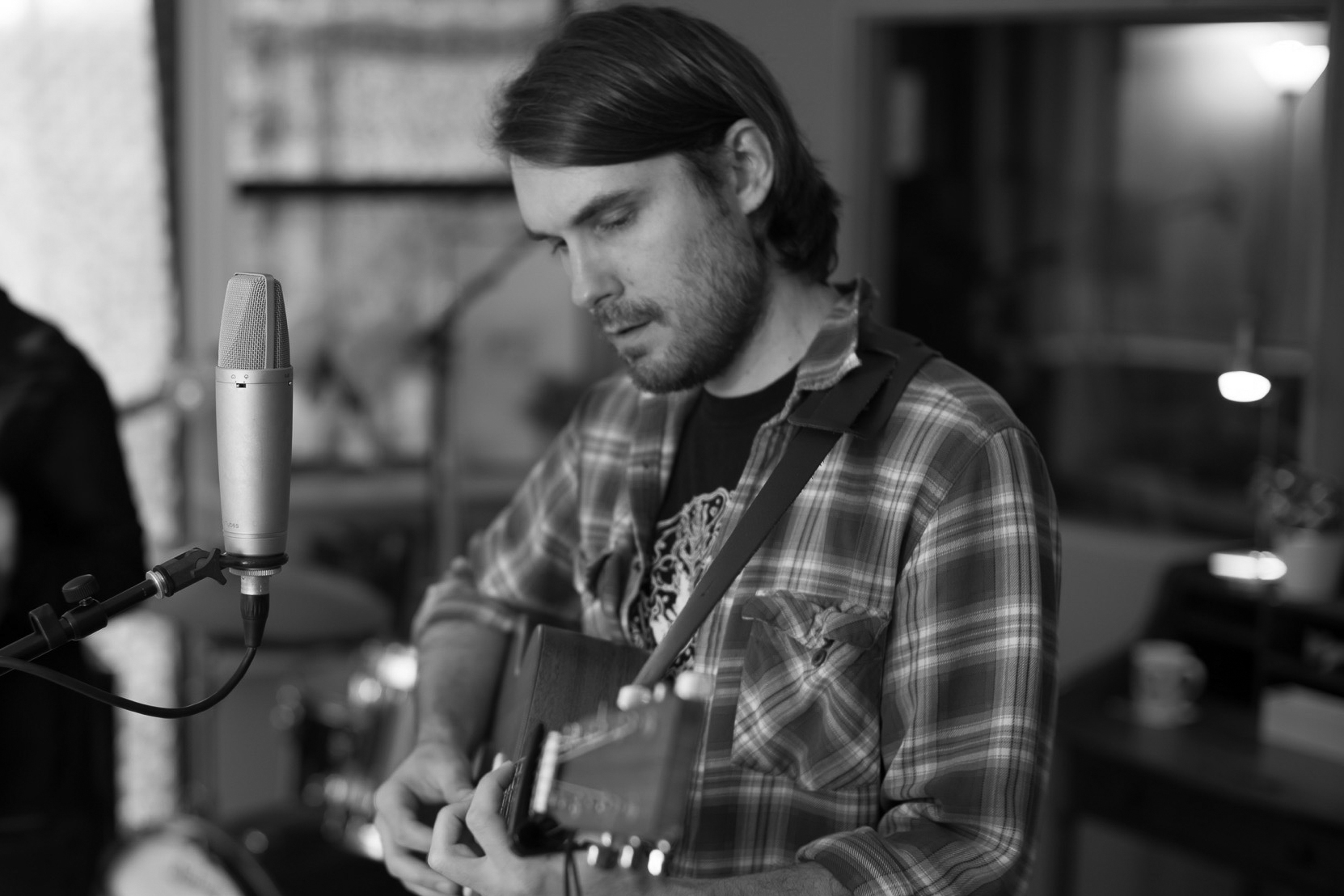
Matt Evans is a composer and songwriter who turned his recovery from traumatic brain injuries into Fog Chaser, a newsletter delivering original instrumental music for focus and calm. New compositions monthly at fogchaser.substack.com